Tag: Noise mitigation
-
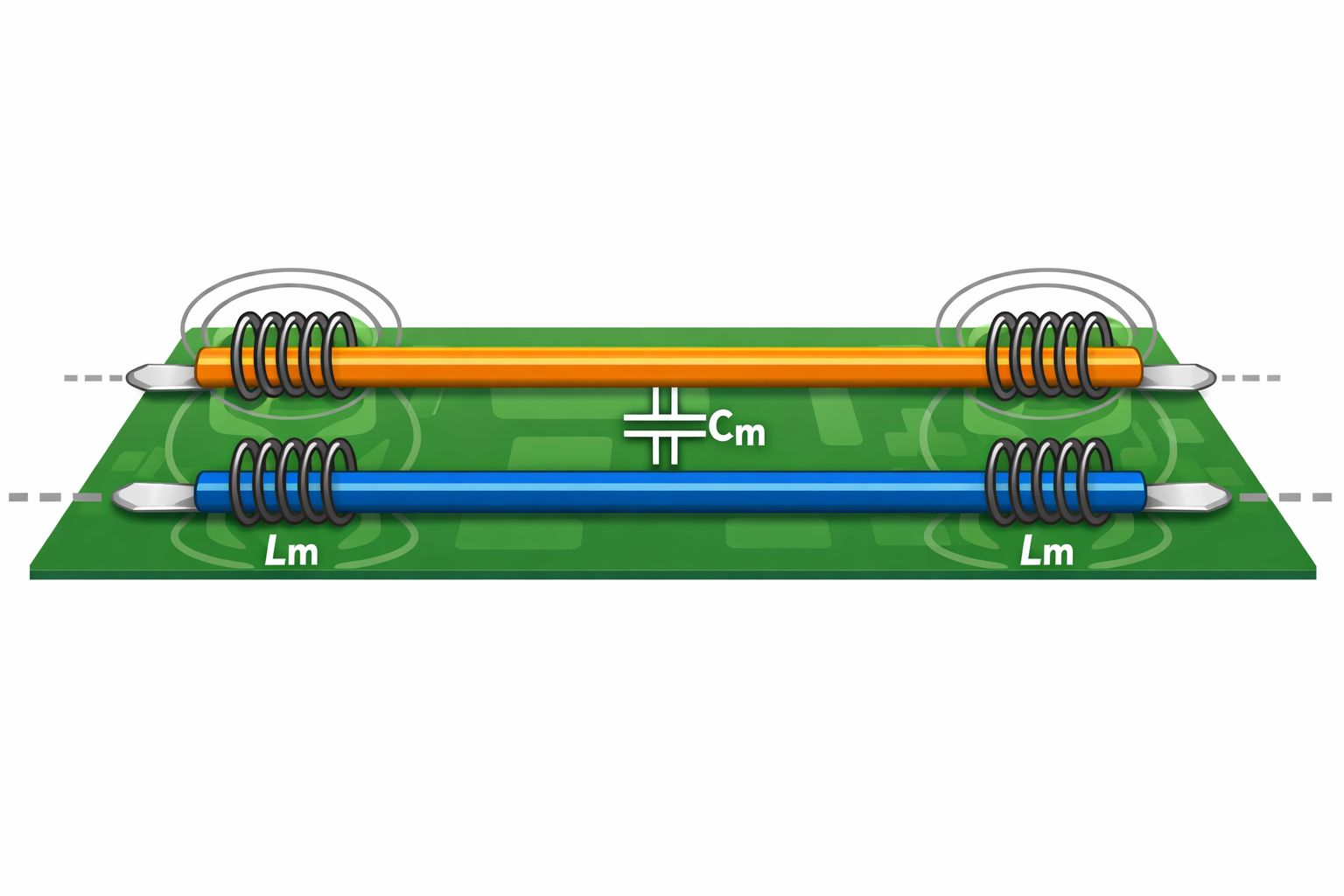
What Is Crosstalk? Understanding Parasitic Coupling in PCB Traces
Crosstalk is an unavoidable phenomenon in high-speed digital circuits and densely routed PCBs. In practical design work, it is often discussed as a set of rules—such as increasing trace spacing, routing orthogonally, or placing ground traces nearby—while the physical reasons why these rules work are rarely explained in depth. As a result, crosstalk tends to…
-

Why Ferrite Beads Work: Damping Ringing with Loss (uSimmics Waveforms)
Ferrite beads are widely used for noise suppression. You often see them on power rails and I/O lines, and in many cases they are treated as “just put one in for now.” However, If you keep using ferrite beads in that state, design decisions tend to become ad-hoc and person-dependent. In this article, we整理 (organize)…
-
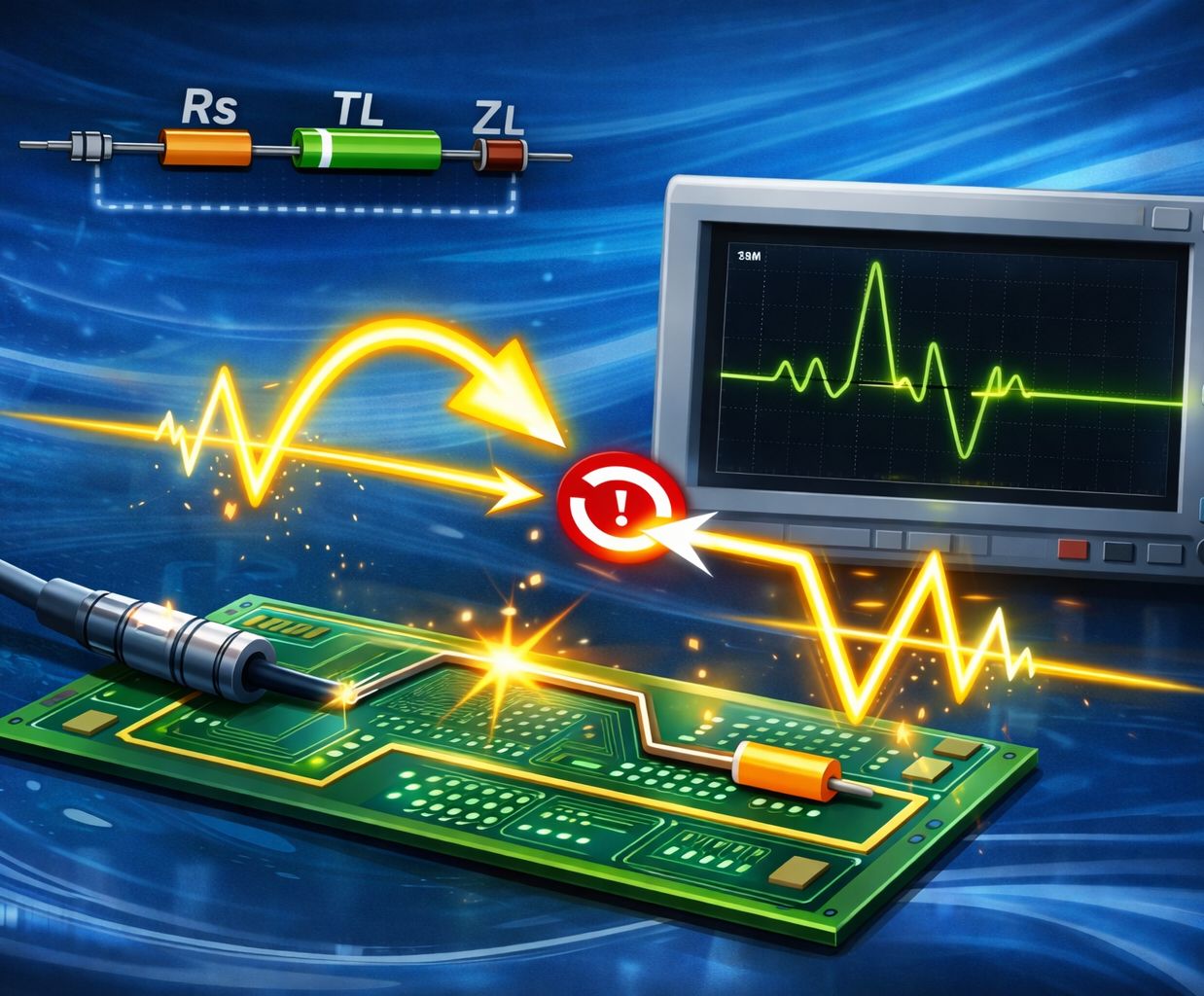
Understanding Signal Reflection in High-Speed Digital Circuits
What Is “Reflection” in High-Speed Signals? In high-speed digital signals, a trace does not behave as a simple wire but as a transmission line. As a result, depending on the termination condition, part of the signal energy can be sent back toward the source. This phenomenon is called reflection. Reflection is not a case of…
-

Noise Mitigation Basics with uSimmics: Source → Path → Victim
When we talk about noise countermeasures, we often end up with “just add a decoupling capacitor” or “just add a ferrite bead.” These can work, but if we rely only on guesswork, we may not understand why it worked, and we cannot reproduce the same result next time. In this article, I introduce a basic…