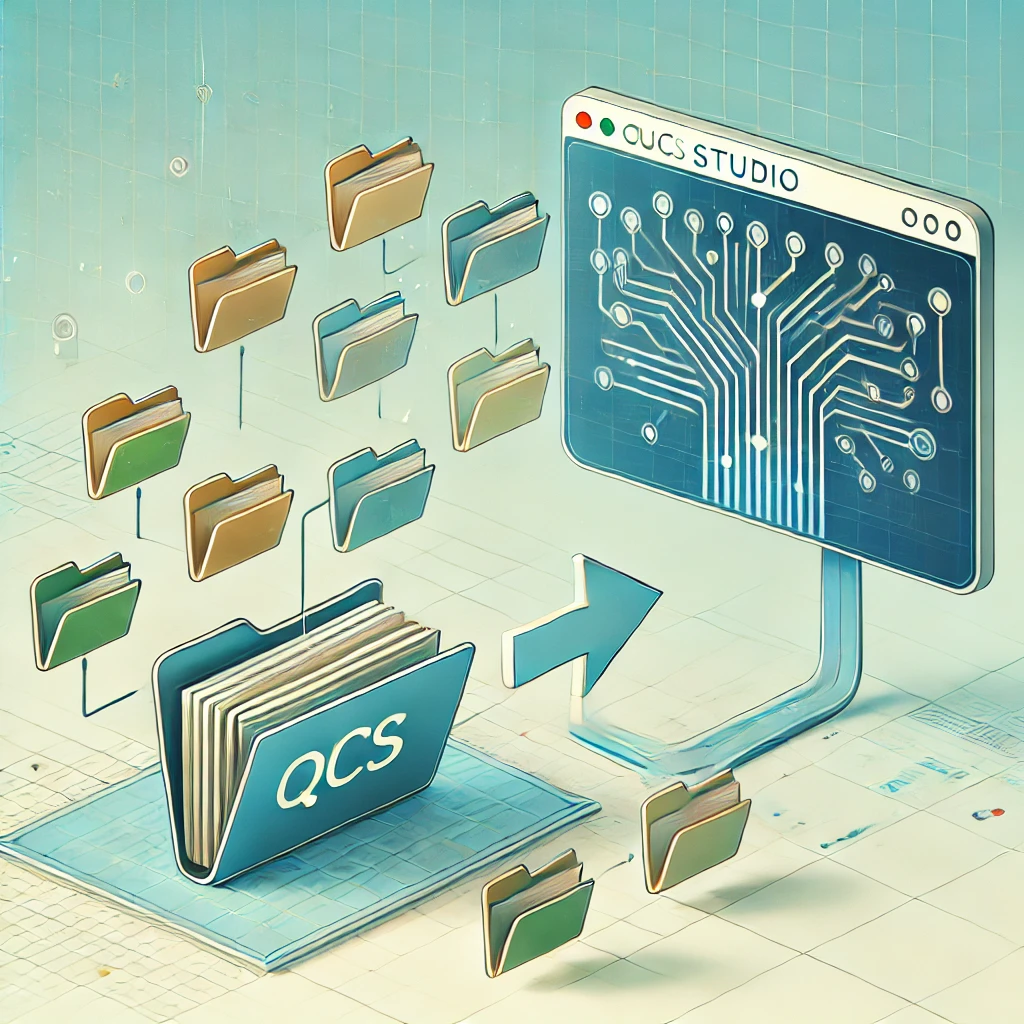
When using uSimmics (formerly QucsStudio) in a professional environment, you may need to store projects somewhere other than the default .qucs folder — for example, on a shared team drive, a cloud-sync folder, or a dedicated backup location. Changing the project directory is straightforward and can significantly improve how you manage and organize simulation work. This article walks through the complete procedure using the shortcut launch-option method.
What You’ll Learn
- Where uSimmics (formerly QucsStudio) stores projects by default and why you might want to change it
- How to modify the shortcut’s Target field to redirect the project folder
- The correct syntax when the folder path contains spaces
- How to verify the change and troubleshoot common issues
- Best practices for organizing and managing your project folder efficiently
The Default Project Location
By default, uSimmics (formerly QucsStudio) saves projects and configuration files in the .qucs folder inside your user profile directory:
C:\Users\YourUsername\.qucs\
This default location can cause several practical problems:
- The folder name starts with a dot, making it hidden and hard to locate in Windows Explorer
- All projects accumulate in one folder, making management increasingly difficult
- The folder cannot easily be moved to a network drive or cloud-sync location (Dropbox, OneDrive, etc.)
- It may be excluded from your organization’s backup scope
Redirecting the project folder to a location of your choosing eliminates these issues and greatly improves day-to-day project management. The whole procedure takes only five steps.
Step-by-Step Procedure
Step 1: Locate the Executable (qucs.exe)
First, find the qucs.exe executable. Because uSimmics (formerly QucsStudio) is distributed as a portable application — no installation required — it is located directly inside the folder you extracted after downloading.
A typical path looks like this:
C:\path\to\QucsStudio\bin\qucs.exe
If you cannot find it immediately, use Windows Explorer’s search function to locate qucs.exe.
Step 2: Create a Desktop Shortcut
Right-click qucs.exe and select Create shortcut. A shortcut will appear in the same folder; move it to your desktop. You can now launch uSimmics (formerly QucsStudio) directly from the desktop.
Note: If a desktop shortcut already exists, you can edit it directly — no need to create a new one.
Step 3: Edit the Shortcut Properties
Right-click the desktop shortcut and select Properties. Open the Shortcut tab; the current executable path appears in the Target field.
Before (default):
"C:\path\to\QucsStudio\bin\qucs.exe"
Append the desired project folder path to the end of the Target field using the - option:
After (example — saving to a QucsProjects folder inside Documents):
"C:\path\to\QucsStudio\bin\qucs.exe" -C:\Users\YourUsername\Documents\QucsProjects
If the folder path contains spaces:
Enclose the path in double quotes:
"C:\path\to\QucsStudio\bin\qucs.exe" -"C:\Users\YourUsername\My Projects\Qucs"
Key point: The path specified after the
-option becomes the new project folder root. Make sure the folder exists before launching — create it in Windows Explorer if it does not.
Step 4: Save and Verify
- Click OK to close the Properties dialog.
- Double-click the desktop shortcut to launch uSimmics (formerly QucsStudio).
- Go to File → Open Project or check the Projects tab to confirm that the new folder is being referenced.
- Create a new project and verify that it is saved inside the folder you specified.
Step 5: Organize the Project Folder
Once the migration is complete, set up a clear subfolder structure to keep future projects tidy.
Example folder layout:
QucsProjects\
├── 2026_LPF_Design\
├── 2026_RF_Amplifier\
├── 2026_PowerSupply_Simulation\
└── Archive\
    └── 2025_Projects\
Including the year and a brief description in the folder name makes it easy to identify a project at a glance when returning to it later.
Troubleshooting
Cannot Access the Specified Folder
Work through the following checks in order:
-
Typo in the path
Re-read the Target field carefully. If the path contains spaces, ensure it is wrapped in double quotes. -
Folder does not exist
Confirm that the folder actually exists. If it does not, create it manually in Windows Explorer before launching. -
Administrator permission issue
If you are trying to save to a protected location (e.g., Program Files), right-click the shortcut and choose Run as administrator. In general, however, Documents or a desktop subfolder is strongly recommended to avoid permission problems. -
Conflict with the existing .qucs folder
If you need to migrate existing projects, manually copy the project subfolders from the.qucsdirectory into the new location.
Best Practices
Automatic Backup via Cloud Storage
Setting the project folder inside OneDrive, Dropbox, or Google Drive enables automatic cloud backup with no additional effort. Alternatively, you can set up a scheduled backup script to copy the folder to a secondary location regularly.
Team Collaboration
Pointing the project folder to a shared network drive makes it easy to share simulation files with teammates. That said, avoid having multiple people edit the same project file simultaneously, and consider pairing this with a version-control workflow for larger teams.
Managing Multiple Versions of uSimmics
When upgrading to a new version of uSimmics (formerly QucsStudio), create a separate shortcut for each version pointing to its own project folder. This avoids cross-version compatibility problems and lets you safely test the new version without risking your existing projects.
Summary
Redirecting the project folder in uSimmics (formerly QucsStudio) is as simple as appending -<path> to the Target field of the desktop shortcut. Moving projects to a convenient location improves organization, simplifies backup, and enables team sharing. Use the steps in this article to tailor your simulation environment to your own working style.
Related Articles
- uSimmics (formerly QucsStudio) vs. QUCS: Key Differences and Evolution [2026]
- Parametric Analysis of Electronic Circuits with uSimmics (formerly QucsStudio) [2026]
- uSimmics (formerly QucsStudio) Monte Carlo Simulation: How to Configure the tol Function Parameters [2026]
- uSimmics (formerly QucsStudio) Monte Carlo Analysis: Setting Standard Deviation Parameters for Real Components [2026]
- Circuit Editor Basics and Getting Started with uSimmics (formerly QucsStudio)


Comment