Month: February 2024
-

Automatic Impedance Matching with QucsStudio
QucsStudio is a comprehensive simulation tool for designing and optimizing RF systems, providing features that facilitate impedance matching and enhance system performance among its diverse functionalities. In this article, we introduce the automatic power matching feature. Executing Matching Work As an example, we will perform impedance matching for an antenna. We will use the antenna…
-

Smith Chart Basics: Effective Use in RF Design
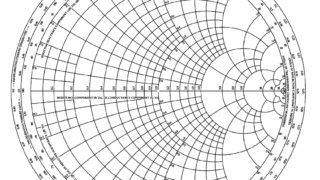
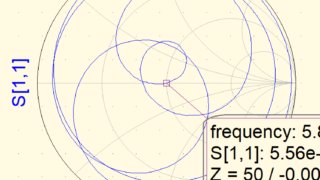
The Smith Chart is characterized by its beautiful arcs representing the magnitude and phase of the reflection coefficient. By utilizing this chart, it is possible to visually determine the values of circuit elements needed for impedance matching in high-frequency circuit design. Particularly, properly matching impedance between various components such as transmitters and antennas is crucial…
-

Calculating the Characteristic Impedance of Strip Lines Using QucsStudio
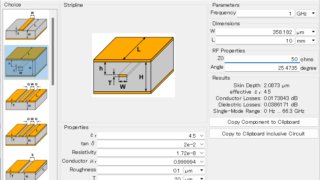
One of the critical factors affecting the quality of signal transmission in PCB design is the characteristic impedance. This is especially crucial in internal transmission lines like striplines, where accurate calculation and management of their characteristic impedance are essential. This article provides a step-by-step guide on calculating the characteristic impedance of striplines using QucsStudio. 1.…
-

Calculating the Characteristic Impedance of Microstrip Lines Using QucsStudio
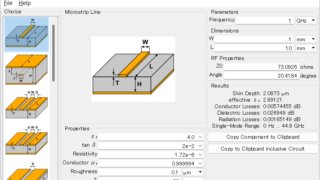
In the world of PCB design, proper management of characteristic impedance is crucial for the quality of signal transmission. This article explains the basics of characteristic impedance, its importance, and how to calculate it using QucsStudio. 1. The Concept of Characteristic Impedance Characteristic impedance refers to the “ratio of voltage to current” in electrical signal…
-

QucsStudio: A Beginner’s Guide to VSWR (Voltage Standing Wave Ratio) Analysis
VSWR: From Basics to Antenna Performance Evaluation VSWR is an important metric in the design and evaluation of antennas and RF transmission paths. This article explains the concept of VSWR, its measurement methods, and the process of displaying a VSWR graph from the antenna’s S parameters using QucsStudio. What is VSWR? VSWR (Voltage Standing Wave…
-

LPF Design Using QucsStudio: Optimizing with Real Component S-Parameters
Last time, we designed and simulated an LPF for Sub-GHz band (915MHz) communication using ideal capacitors and inductors with QucsStudio. This time, as a sequel, we conduct a more realistic simulation using actual components from Murata Manufacturing Co., Ltd., and compare them with the ideal components. Selecting Real Components The capacitors and inductors callable in…
-

LPF Design Guide Using QucsStudio
This time, we will explain in detail the design process of a Low Pass Filter (LPF) for Sub-GHz (915MHz) communication using QucsStudio. Step 1: Setting the Target Performance To send radio waves farther, we use an amplifier to amplify the signal. To improve power efficiency during amplification, it is desirable to amplify the signal by…
-

Executing Monte Carlo Analysis in QucsStudio
Qucs Studio is an electronic circuit simulation software equipped with multifunctionality to address various challenges faced by designers. Among its features, the “Monte Carlo analysis” function, which enables analysis incorporating uncertainties such as component tolerances and manufacturing variations, stands out as one of Qucs Studio’s notable attractions. This blog introduces the importance of Monte Carlo…
-

Creating User Models in QucsStudio
Steps for Creating Models In QucsStudio, there are three main approaches to model creation: equation components, VerilogA models, and C++ models. Each of these has its own characteristics and advantages while sharing the common goal of building accurate simulation models. 1. Equation ComponentsEquation components are very suitable for defining the behavior of components using simple…
-

How to Export S-Parameters in QucsStudio
QucsStudio is a powerful tool used for designing and analyzing radio frequency (RF) and microwave circuits. Particularly, the analysis of S-parameters (scattering parameters) is crucial for understanding the efficiency and performance of circuits. This article explains the process of exporting S-parameters using QucsStudio. S-Parameters Basics S-parameters are indicators of how signals behave at specific points…