Profile

Considerations

Understanding Signal Reflection in High-Speed Digital Circuits

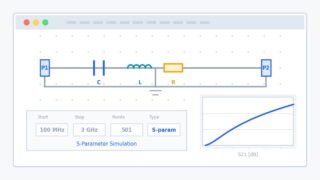
Learn what signal reflection is in high-speed digital circuits.This beginner-friendly guide explains impedance mismatch, transmission lines, and waveform steps using a simple uSimmics simulation.
Considerations

Noise Mitigation Basics with uSimmics: Source → Path → Victim

Learn a simple noise/EMC framework: Source → Path → Victim. See how parasitics (L/C/R) change waveforms in uSimmics, including ground bounce and crosstalk. Understand what decoupling caps, ferrite beads, and solid ground planes really do.
Basics

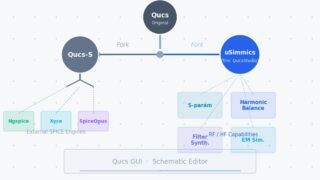
uSimmics(ex QucsStudio): Overview and How to Use This Free Circuit Simulator

QucsStudio has been renamed to uSimmics (formerly QucsStudio). Learn why the name changed, what’s different, how it compares with Qucs, and how to use key features like S-parameters, harmonic balance, tuning, and Monte Carlo analysis.
Basics

How to Install uSimmics (formerly QucsStudio)

Step-by-step Windows guide to install uSimmics (formerly QucsStudio). Download the ZIP, extract it, start with start.bat, and find uSimmics.exe in /bin.
Basics

QucsStudio Initial Setup Guide: Optimizing Your Workflow for Efficient Simulations

A complete guide to setting up QucsStudio! Learn how to optimize Document Settings and Application Settings for a more efficient simulation workflow. Perfect for beginners looking to quickly configure their environment.
Basics

How to Change the Project Folder Location in QucsStudio

Learn how to easily change the project folder location in QucsStudio. This guide provides step-by-step instructions to customize the project folder path using shortcuts. Perfect for beginners to organize their simulation files effectively.
Considerations

Monte Carlo Analysis in QucsStudio: Setting Tolerances and Component Parameters

This article explains how to set tolerance and adjust standard deviation for Monte Carlo analysis in QucsStudio. Learn how to correctly simulate real-world manufacturing tolerances using standard deviation and improve simulation accuracy.
Simulation

Parameter Settings for Monte Carlo Simulation in QucsStudio

A detailed guide on how to use and configure the tol function for Monte Carlo analysis in QucsStudio. Offers tips and insights for accurately simulating component variations in actual circuit design.
Simulation

Parametric Analysis of Electronic Circuits: A Practical Guide Using QucsStudio

A detailed explanation of parametric analysis methods for electronic circuit design using QucsStudio. Evaluate circuit behavior by changing specific parameters and aim for design optimization and performance improvement.
Considerations

Evolution and Differences Between QucsStudio and QUCS: A Comparative Study

Detailed explanation of the differences and evolution of QucsStudio and QUCS. Provides information on which simulator is best for electronic circuit designers and engineers, and highlights the benefits of QucsStudio with its advanced features and ease of installation on Windows.